Review of “Dune”

Dune book review

Dune is often called a Science Fiction masterpiece. Now, in 2020, it’s coming out as a movie that will probably be a major hit. After the release of the movie, I’m guessing the Dune books will enjoy a new wave of popularity, so I recently read them with a view to determining their level of appropriateness for teen readers. In order to make this review a manageable length, I will concentrate on the issues I found in the first book.

Premise

Dune‘s setting is a futuristic interplanetary society where noble houses, a corrupt emperor, a power-hungry pilot’s Guild, and big-business CHOAM vie for power and wealth. There’s also the Bene Gesserit, a warrior-nun group which pursues its own agenda striving for racial purity and power. Wealth in the world of Dune is measured in terms of Melange, also called Spice, a drug which has whole universe under its thrall.

The plot centers around Paul Atreides, a teenager coming of age in one of the noble houses. Paul’s family takes charge of Arrakis, the planet which produces all the Spice. Paul is a unique combination of visionary, genius, and leader. With the aid of his Bene Gesserit mother Lady Jessica, he becomes the leader of the Fremen, a nomadic warrior tribe who control the Spice fields. At the head of the Fremen, Paul takes control of the Empire.

There’s no denying that the scope and richness of the Dune series is captivating. The insights about greed for power and wealth and its results are commendable. I even appreciated the first book simply as a literary work. But as a parent, I found several concerning aspects with this book on multiple levels.

Concerns

Drug Use: the entire planetary system in the world of Dune is addicted to Spice, their drug of choice. Many are well aware of this fact, but choose addiction because they want the heightened senses and visions the Spice brings. There is a heavy emphasis on the powers and enhancements the drug provides. A recipe for encouraging teens to try drugs, anyone?

Sexual content: Lady Jessica is a concubine. There is a scene where another Bene Gesserit “sister” is sent by her husband to sleep with a teenage boy whose DNA they want for their breeding program. Paul takes a concubine from among the Fremen and has a son with her. None of this is particularly graphic; it is more stated than described.

Anti-Catholic content: The Bene Gesserit are basically nuns. Well, except they’re obsessed with preserving the best genes, so frequently become concubines, commit adultery, and so on. They use terms like “Reverend Mother” for their leaders. They send “Missionaries” to other planets to sew seeds of “storylines” in case one of the sisterhood is ever in need. The concept of an “awaited Messiah” is one of these intentionally created legends.

Both the depiction of Bene Gesserit and use of Messiah motif are troublesome. In the world of Dune, the coming of a Messiah is basically a big hoax carefully planned for millennia. “Religion” is an intentional manipulative force used by the Bene Geserit to further their own secret goals of racial purity.

Conclusions

I really dislike it when authors take Catholic terms and intentionally try to pervert the mental connotations, seeding doubt and reversion in the reader’s mind when they hear terms like “Reverend Mother,” “Messiah,” or “Missionary.” In Dune, this agenda extended to the entire concept of religion. For me, that largely ruined the Dune books so I wouldn’t recommend them for teens.

But, if you have an older teen who loves science fiction and really wants to read them, I recommend encouraging an analytical approach. For example, ask your teen to intentionally try to spot all the examples of twisting Religion and Christian terms in a negative way. Or ask them to form an opinion on whether author Herbert was intentionally normalizing drug use and free love. A mature teen can gain a lot of benefit can by this kind of intentional analysis.

Looking for better books for your teens? Check out my book lists, especially my lists for high schoolers!

Review of “The Sweetness at the Bottom of the Pie”

This post may contain Amazon Affiliate links .

The Sweetness at the Bottom of the Pie: A Flavia de Luce Novel by [Bradley, Alan]

70 year old Alan Bradley’s debut mystery novel quickly became an international bestseller- and with reason. In The Sweetness at the Bottom of the Pie, Flavia de Luce brings something completely fresh and new to the mystery scene. Amateur chemist Flavia is all of 11 years old, but when a stranger gets murdered in her family’s garden, she is instantly determined to solve the murder. Precocious and cynical and lovable, Flavia is a one-of-a-kind sleuth in these charming, well-plotted mysteries.

In the Great Tradition of Golden Age Mysteries

Author Bradley seems to have intentionally created a Golden Age of Mystery atmosphere in these novels. Like most Golden Age detective fiction, these books are set in English country houses and cozy villages. Each book opens with Flavia becoming involved in a murder investigation. The clues are provided for the reader so there’s actually hope of figuring out whodunit. The theme is always about bringing justice and restoring order to the house and village.

Surprisingly Clean

With an 11 year old protagonist, this series easily avoids many of the common racy relationship scenes common in mystery novels. There are a few plot points here and there involving adultery or promiscuity, but no explicit details. Since they’re so clean, this series is actually appropriate for teens too.

A Troubled Family

The sad part of these books is Flavia’s troubled family life. Her mother was absent, then dead. Her father is depressed and disinterested. Her sisters are frequently quite cruel. Flavia’s cynical nature is better understood after she explains how her sisters play cruel pranks such as leaving her tied up and locked in a dark cellar. Paradoxically, these same sisters do show loyalty on occasion, even saving Flavia’s life in one novel. The evolving relationship between the sisters is one of the threads that connects the books together and a reason to read them in order.

Given her troubled family situation, it’s no surprise that Flavia is no angel. She frequently lies, manipulates, and prevaricates. She disobeys adults habitually, breaks rules, plays malicious pranks and generally tries to get attention. She’s somewhat disturbingly obsessed with poisons. But despite all this, it’s easy to see this brilliant, lost adolescent’s potential, and you quickly begin rooting for her- not only to solve the mystery but to grow as a person.

A Mystery Series for Teens and Adults to Enjoy

Fans of Agatha Christie, Dorothy Sayers, and Sherlock Holmes will really enjoy these clever mysteries which reach back to the Golden Age for inspiration. Given Flavia’s troubled, precocious personality and the violent murders, I wouldn’t recommend them for younger teens. The books are intended for adults, but I think older teens would also enjoy them. Enjoy a little escape time as you peruse The Sweetness at the Bottom of the Pie.

Review of “Introverted Mom”

"Introverted Mom" book cover
This post may contain Amazon Affiliate links. This simply means that if a purchase is made I will receive a small percentage of the sale, at no additional cost to you, of course.

Introverted Mom: Your Guide to More Calm, Less Guilt, and Quiet Joy by Jamie Martin is a lovely literary feast that reassures introverted moms that their quiet natures are actually a gift to their families. At the same time, Jamie does not hold back on pointing out just how devastating daily life as a mom can be for women with an introverted nature. Jamie is a deeply introverted mother who has navigated being a full time stay at home mom, homeschooler, and adoptive mom. Introverted Mom is a pleasing blend of personal stories and wisdom from beloved introverted authors such as L.M. Montgomery, Jane Austen, and Louisa May Alcott. However, as enjoyable a book as Introverted Mom is, I ponder how much better this book could be with a Catholic flavor, drawing on the wisdom of introverted Saints along with authors.

Are you an introvert?

Jamie begins with a self-assessment of your introversion level. Moms who are already familiar with personality testing can skim this part. But some moms who generally consider themselves extroverts may be surprised to learn that they actually fall on the introversion spectrum. As Jamie explains, motherhood is particularly difficult for introverts due to the sheer number of introvert stressors inherent to being a mom. So someone who may have always considered themselves an extrovert may find themselves overwhelmed by motherhood until they recognize and accept their true introversion.

Literary Introverts

The funnest parts of Introverted Mom are all the quotes and reflections on some favorite introverted authors: Louisa May Alcott, Jane Austen, L.M. Montgomery, and Laura Ingalls Wilder. Their thoughts on finding peace and happiness in daily life will resonate deeply with introverts. Jamie also draws on modern day introverted author Susan Cain and her fascinating book Quiet: The Power of Introverts in a World That Can’t Stop Talking. Quiet happens to be one of my personal favorite books, so I loved that Jamie drew on some of Cain’s psychological insights and scientific studies.

The basic premise in Quiet and Introverted Mom is that western culture, especially in America, values extroverted strengths while ignoring or disparaging the natural strengths of introverts. (For example: ever been called too quiet?) Quiet uses reams of research, science, studies, and anthropology to challenge the notion that there is something inherently better or preferable about extroverted characters. It’s thought-provoking and evidence-based. Introverted Mom is much less scientific and more personal in its scope, drawing on anecdotes, famous quotes, and common sense to encourage introverted women to accept and appreciate their strengths- and weaknesses. Depending on your taste in literature, you may enjoy one or both books. As Jamie might point out, if you’re a Meyers-Briggs Personality Test F, you’ll enjoy her book more; if you’re a T like me you’ll probably prefer Quiet!

Protestant Influences

I think Jamie made a solid effort to give this book as broad a Christian appeal as possible. There is nothing anti-Catholic, and even a nice reflection on Mary as an introverted mother. On the other hand, her humorous reflections on being an introvert in a charismatic church are clearly aimed at evangelical Protestants. Although Jamie finds a way to laugh at how out of place introversion is in a charismatic church, she also seems to feel a certain longing for a more natural way of worship. She prefaces her chapter on religion with a popular L. M. Montgomery passage about needing silence and solitude to connect with God:

“If I really wanted to pray I’ll tell you what I’d do. I’d go out into a great big field all alone or in the woods and I’d look up into the sky…”

Anne of Green Gables, L. M. Montgomery (emphasis added)

I think Jamie, and other Protestant introverts, have a rougher time of it than Catholic introverts when it comes to prayer and worship. This is one reason I think a similar book for introverted moms written from a Catholic perspective could have so much more depth.

Catholic Offerings

For those with an introverted spirit, Catholicism has some fantastic offerings: Eucharistic Adoration, contemplative prayer such as the Rosary, an entire vocation and lifestyle in the Contemplative life, hundreds of introverted Saints with extensive writings to meditate on… The list goes on and on. To take just one example of the wisdom and practical suggestions to be found in the lives of the saints, look at Saint Teresa of Calcutta, a well-known introvert. This saint insisted on a time of quiet Eucharistic adoration and a rest time during the afternoon for her nuns. As an introvert, she knew that she herself and her fellow nuns needed to carve out quiet and solitude in order to recharge so they could serve others.

So by all means read and enjoy what Introverted Mom has to offer in terms of self-help suggestions, but remember that there are more riches of wisdom to help in the journey of motherhood than Protestantism offers!

So who wants to write a Catholic version of Introverted Mom?

Concerning Turkish Delight

Turkish Delight scene, the Lion, the Witch, and the Wardrobe

One of the tags I use here on GoodBooksforCatholicKids.com is Turkish Delight. This tag, and indeed the book review portion of the blog, was inspired by a particular chapter in C. S. Lewis’s The Lion, the Witch, and the Wardrobe titled “Turkish Delight.” I’ve read The Chronicles of Narnia at least a dozen times, and over these many re-reads I began to see an analogy between Turkish Delight and certain books.

“Turkish Delight”

In the chapter “Turkish Delight,” Edmund enters Narnia for the first time and almost immediately meets the White Witch. She offers him food and he asks for Turkish Delight, which she magically produces. Lewis describes the confection in mouth-watering fashion: “Each piece was sweet and light to the very center and Edmund had never tasted anything more delicious.” But really, of course, the candy was quite dangerous, even deadly: it confused the eater’s mind and eventually leads to death.

“While he was eating the Queen kept asking him questions. At first Edmund tried to remember that it is rude to speak with one’s mouth full, but soon he forgot about this and thought only of trying to shovel down as much Turkish Delight as he could, and the more he ate the more he wanted to eat, and he never asked himself why the Queen should be so inquisitive. . . .

[T]his was enchanted Turkish Delight and anyone who had once tasted it would want more and more of it, and would even, if they were allowed, go on eating it till they killed themselves.”

~ The Lion, the Witch, and the Wardrobe, by C. S. Lewis

Of course, the reader can easily extrapolate the symbol of Turkish Delight to apply to many categories of temptations and vices. For me, though, Turkish Delight always symbolized a certain type of book: easily inhaled, pleasant, addictive, and with poisonous content that killed the soul.

Weakening and Addictive

In The Lion, the Witch and the Wardrobe, the Witch offers rooms full of Turkish Delight- unlimited light, easy pleasure- in exchange for Edmund bringing her his siblings. At first, it’s hard to imagine how Edmund can be willing to trade his siblings and soul for more candy. But if you consider that Lewis is using Turkish Delight as an allegory for temptation and sin, the puzzle of Edmund’s actions becomes clearer. A temptation succumbed to is a sin, and sin weakens the soul. So Turkish Delight weakens Edmund’s ability to clearly discern the good and withstand future temptations. Lewis describes that after eating the enchanted food, Edmund starts “becoming a nastier person by the minute.”

Turkish Delight and Books

On my blog, books tagged Turkish Delight are examples of unwholesome literature that results in weakening of the soul. Good literature has great power to inspire positive changes in mindset. On the flip side, unwholesome literature results in bad attitudes and negative behavior changes. As a case in point, after my popular Review of Diary of a Wimpy Kid came out, I had several parents reach out and tell me how they knew their must be something wrong with the book from their children’s worsening behavior after reading it.

Ruining Appreciation of the Good

Later in The Lion, the Witch, and the Wardrobe, Edmund can’t enjoy a delicious, wholesome meal when he returns to Narnia. At the Beaver’s House, he can’t appreciate the simple but delicious food he was served:

“He had eaten his share of the dinner, but he hadn’t really enjoyed it because he was thinking all the time about Turkish Delight- and there’s nothing that spoils the taste of good ordinary food half so much as the memory of bad magic food.”

The Lion, the Witch, and the Wardrobe by C. S. Lewis

How many kids can’t seem to enjoy classics like Tom Sawyer, The Melendys, Swallows and Amazons, Treasure Island, or Little Britches anymore? In many cases, I think this is the result of exposure to Turkish Delight style literature.

How to avoid Turkish Delight books?

Inevitably, your children will eventually stumble upon books that are of the Turkish Delight category. The best way to help your children develop the ability to recognize and avoid books which are unwholesome is to help them develop an appetite for good books. How? Buy great books. Borrow them from the library or a friend if you can’t buy them. Read them aloud to your little children, and have them available for your older children. Need ideas of great books? Check out my Books Lists for thousands of ideas!

Have a child who loves Narnia? Look at this list of great fantasy series for Catholic kids and teens:

Review of “The Sisterhood of the Traveling Pants”

The Sisterhood of the Traveling Pants Book Poster Image

The Sisterhood of the Traveling Pants is one of those oft-recommended young adult series. It’s promoted as a modern classic by many libraries. Even some reputable review sites like commonsensemedia.org recommends it for 12+. The series premise is that four close friends share a special pair of jeans which help them stay close even when apart. The depiction of strong, healthy female friendship is moving and imitable, but there are definitely concerning aspects of this series Catholic parents need to be tracking.

Great premise, poor writing

Bridget, Lena, Tibby, and Carmen share a robust, close friendship. Always there for each other, always ready to sacrifice for one another, the parts of this series that focus on their friendship are in fact quite inspiring. The writing style, however, is shallow. The plot is not well-planned, and the character growth is uneven or inconsistent with some of the characters. I might have forgiven some of this though if I wasn’t so concerned with the amount of sexual content in a tween/teen series.

Too much focus on sex

There are really two themes in The Sisterhood of the Traveling Pants. One is female friendship, the other is discovering your sexuality and losing your virginity. This series is written for a secular audience, so perhaps this is the norm in public schools, but Catholic parents may be startled to learn that this series describes events such as 15 year old Bridget seducing her 19 year old soccer coach. In a later book, 18 year old Bridget begins a similar seduction of her married archaeology professor, but at least stops at passionate making out, for what that’s worth. Tibby, at 18, fornicates with her boyfriend and then has a pregnancy scare. Lena, at 18, engages in nude modeling in art school and eventually loses her virginity to a guy she admits to not really loving or seeing marrying. Throughout the series, a lot of the plot is concerning who will sleep with who and when? Interesting content for a series that is supposed to be promoting positive teen behavior.

Lessons: too vague, too incoherent

Are the consequences of all this sexual misconduct negatively portrayed? Sometimes. Bridget falls into a year long depression after seducing her soccer coach and being rejected. The message is that it was a mistake because she was “too young.” But then, two years later, when she meets the soccer coach again and they fall in love, apparently she is now “old enough” and having sexual relations is acceptable. According to The Sisterhood of the Traveling Pants, having sex with your boyfriend is just fine as long as you’re “old enough” and “feel” right about it.

After Tibby fornicates with her boyfriend, she is terrified she’s pregnant, which causes her major anxiety and leads to breaking up with the boyfriend. But again, the message is not that sex outside of marriage is wrong, but rather that the timing was wrong. Even as Tibby regrets that she might be pregnant, the author makes sure to clarify that she didn’t actually regret having sex, because “she was ready.”

So The Sisterhood of the Traveling Pants delivers a typical secular message that sex outside of marriage is okay overall, as long as you’re “ready” and not “too young.”

Great Premise, but unfit for Christian consumption

I would love to see a similar series with themes about strong female friendships, loyalty, and growing up, but done in a way that is appropriate for Catholic teens. Sadly, none of the teens in The Sisterhood of the Traveling Pants have any sort of moral compass regarding sexuality and relationships. Lacking guidance from wise adults or any philosophical or religious formation, they make decisions based strictly on what feels right to them. Consequently, the characters in The Sisterhood of the Traveling Pants are poor role models. I cannot recommend this series for Catholic teens under any circumstances.

Review of “North American Martyrs”

North American Martyrs Kids Activity Book by Bonnie Way and Katherine Babcock

North American Martyrs Kids Activity Book is a fantastic resource for Catholic families. Written by Bonnie Way, the Koala Mom, this is a creative and well-researched activity book. It provides both biographical information on eight Catholic men who were martyred for their faith in seventeenth century North America and fun activities.

This post may contain Amazon Affiliate links.

Focus on Courage and Charity

The eight North American martyrs are inspiring men who vividly demonstrated both the great commandments in their curtailed lives. Each martyr possessed such a burning love for God that they risked their lives to spread the Gospel to the Native Americans and First Nation people of Canada and the United States. Often tortured and persecuted, they willingly returned to their mission fields and the American people they loved until their deaths. In North American Martyrs Kids Activity Book, the selfless life of each martyr is described briefly but with sufficient detail to inspire twenty first century children with a admiration for what these men endured for their faith.

A Great Unit Study Resource

In addition to the stories of these martyr’s lives, North American Martyrs Kids Activity Book contains plenty of mazes, crosswords, word finds, decoding, and writing prompts to emphasize the important information. The book is divided into each sections, each with a biography and activities, making it a perfect unit study or saint a week book for the summer months. I also think this book would be great to keep an 8-12 year old occupied on a long road trip or vacation.

A Catholic Activity Book

The neatest thing about this book is its originality: a specific Catholic martyr themed activity book? Who’d have thought! At $15.00 for a 130 page activity book, it’s even very reasonably priced! Would I change anything? I might add color photos and more images in general, but overall this is a well-done and worthwhile activity book for the 8-12 year old crowd.

I received a free copy of North American Martyrs Kids Activity Book from thekoalamom.com in exchange for my honest and unbiased review.

Looking for more books for middle grade kids? Check out my lists for Boys and Girls!

North American Martyrs Kids Activity Book by Bonnie Way and Katherine Babcock

Review of “The Weapons of War”

Weapons of War, Brendan and Eric in Exile
This article contains Amazon Affiliate links. See footer for full disclosure.

The Weapons of War

Catholic Apologetics in graphic novel form: what could be better? In this latest volume of the Brendan and Eric in Exile series, everyone’s favorite space pilots are reassigned to fly the space taxi in recently settled Mars. There, they find a society where religion has been outlawed and Christians face real persecution and death. Brendan and Eric find themselves defending the sacraments and Catholicism like never before in Weapons of War!

Solid Apologetics

The mysterious author of the Brendan and Eric books is actually a contemplative monk and priest, so it comes as no surprise that these books are steeped in solid theology. Readers will find handy notations in the bottom margins of the story noting key passages in the Bible and Catechism of the Catholic Church which back up Brendan’s reasoning. In this latest volume, Eric and Brendan debate on a wide range of apologetical issues: with Protestants who challenge them about the priesthood, confession, and Baptism, with atheists on marriage and the Eucharist, and even with a lady who believes in universal salvation. The Bible verses fly as fast as the drones in this novel!

Ecumenical Cooperation

In this latest book, Brendan and Eric spend a good deal of time debating Biblical interpretation with the Protestant pastor. But when faced with a anti-Christian society, the Protestants and Catholics on Mars work together to get the message of Jesus’ love and promise of salvation broadcast to the uncatechized inhabitants of the planet. Risking all their lives, they broadcast a message about Jesus’ love and mercy. Later, the Protestant pastor and his assistant again help the Catholic characters to rescue their priest, who has been imprisoned. There’s a great message in this novel about working together with our separated Protestant brethren, who are Christians too.

Great For Teens

The graphic novel style of this book will speak to tweens and teens. This book would make a great gift for First Holy Communion or Confirmation, or even for someone completing RCIA. Even adults will enjoy brushing up their Sacrament Apologetics with this easy to read format! The other two books in the series are also excellent. In the first volume, The Truth Is Out There, Brendan and Eric learn about God, and how faith and reason are not contradictory. Then in The Big Picture they combat a maniac who wants to change God’s plan for salvation. This series is a wonderful way for Catholic kids to learn about the Catholic faith and apologetics in a fun, engaging format.

For my great graphic novels for Catholic kids, check out this list!

I received a copy of Weapons of War from Catholic Answers Press in exchange for my honest and unbiased review.

Weapons of War, Brendan and Eric in Exile

Review of “The Wind, The Road, and the Way”

This review may contain Amazon Affiliate Links.

By request of a couple different blog followers, I recently read The Wind, the Road, and the Way, one of Jenny L. Cote’s popular Epic Order of Seven series. This Biblical fiction series follows the adventures of seven special talking animals who, in this fantasized version of the Bible, play a key role in helping Jesus and His apostles. Sound a bit bizarre? Well, it is definitely a creative interpretation. In this part of the series, Max, Liz, and the other animals race around freeing Peter and Paul from jail and conversing with Mary and Jesus. The question is: are these books misleading for Catholic kids?

18341685

To Give Due Credit

The commendable part of this series is that Cote really does do a tremendous job weaving in some serious Biblical exegesis. In this book which focuses on the end of the Gospel of Luke and the Acts of the Apostles, she includes explanations of Jewish feasts and how Jesus fulfills them. She explains how Jesus fulfills Old Testament prophecies. She includes interesting tidbits about what the number of fish the disciples catch represents, and what a net breaking or not breaking might symbolize. There’s a lot of fascinating information that I would love my kids to encounter. But, big caveat here, not all the exegesis is is line with Catholic teaching.

Out of Line with Catholic Teaching

For all the solid exegetical details Cote includes, whenever she retells a part of the Bible that supports Catholic teaching, she ignores the implications, or even changes details to suit her story line. For example, in the story of the disciples on the road to Emmaeus in Luke 24:13-35, Catholic scholars typically interpret the disciples recognizing Jesus in the breaking of the bread as a Eucharistic reference. Cote instead adds in her own details about the disciples noticing Jesus’ pierced hands during the meal and thus recognizing Him.

Another convenient example of skirting tricky verses comes with anything to do with Peter and Petrine privelege. In fact, I laughed about the explanation of Matthew 16 which somehow completely ignored that the verse is about Peter at all.

But the big deal breaker for me was that Cote takes the common Protestant position that Mary had other children. In parts of The Wind, the Road, the Way, Mary is described as interacting with her four “other sons,” Jude, James, Simon, and Joses. Denying Mary’s perpetual virginity is a very common Protestant stance, and another example of why the theology and exegesis in these books cannot be trusted.

I’ll pass

Although I appreciate Cote’s attempt to bring Biblical exegesis to tweens and teens in an accessible package, I cannot recommend her books for Catholic readers. Unless a parent is willing to put considerable effort into dissecting these books sentence by sentence with their child and verifying or disproving the exegetical claims, there is a serious danger that young Catholic readers will become confused or shaken in their faith. I’d rather have my kids reading great Catholic Biblical exegetical works like Scott Hahn’s Understanding The Scriptures, Life of Jesus, or, for younger readers, Cavin’s Great Adventure Storybook.

Review of Rosemary Sutcliff’s Books

A Guide for Parents

Rosemary Sutcliff was a prolific writer of historical fiction for children from the 1950’s through the 1980’s. Her fascination with ancient England in its earliest days led her to write primarily about this exciting time period. Although often labeled juvenile historical fiction, her well-researched and finely written books can be enjoyed by readers of all ages. Although most of her books are refreshingly clean, enjoyable stories, a few of her books contain more adult content that Catholic parents might not appreciate their younger children reading. In this review, I include plot summaries and guides to objectionable content for over 10 of Sutcliff’s best known books.

Amazon affiliate links included.

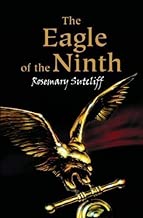
The Eagle of The Ninth by Sutcliff, Rosemary 2004 Edition (2004)

The Eagle of the 9th

The Eagle of the Ninth is a fantastic story of Roman-occupied Britain and one of Sutcliff’s most beloved books. A young Roman centurion embarks on a quest to clear his father’s legion from the dark rumors which surround it. There are great themes about friendship, loyalty, true freedom, and coping with disabilities. There’s also a subplot of a clean, sweet romance, though parents might want to know that the girl is quite young: earlier teens. This is true to the historical time period in which girls married quite young and therefore didn’t bother me. Appropriate for 10 year old advanced readers; I recommend age 12 or older for most readers.

The Silver Branch (The Roman Britain Trilogy)

The Silver Branch

Generations after the events of The Eagle of the 9th, a young Roman surgeon lands in Britain and finds himself thrust into a pivotal role as Emperors rise and fall in the disintegrating Roman empire. The Silver Branch is a completely clean and enjoyable book with a shy, brave protagonist. Great for 10 and older.

The Lantern Bearers (The Roman Britain Trilogy Book 3)

The Lantern Bearers

Another volume which follows the descendants of The Eagle of the 9th hero, The Lantern Bearers is a more serious look at the repercussions of Rome withdrawing from Britain. A major theme is trying to save bits of civilization from the darkness of barbarian invasion. Other themes include the horror of slavery and family loyalty. There is a forced marriage which turns out all right in the end; clean and appropriate for young readers.

Sword at Sunset (Rediscovered Classics)

Sword at Sunset

Sword at Sunset, a retelling of the Arthurian legends, is one of my least favorite Sutcliff books. This sequel to The Lantern Bearers unexpectedly jumps into all sorts of more adult content, such as a steamy incestuous seduction scene. A theme throughout the book is homosexuality among the “knights.” Artos, the Arthur character, says he wishes his whole army was homosexuals since it saves trouble with girls. The homosexual couple is highly romanticized, actually having the most stable and loving relationship in the book. This stable homosexual couple is a foil to Artos and his queen’s troubled marriage. There is also an adultery scene with some explicit details. Definitely avoid this one for younger readers.

The Mark of the Horse Lord (Rediscovered Classics)

Mark of the Horse Lord

The Mark of the Horse Lord is a darker, more violent Sutcliff book. In several ways reminiscent of The Prisoner of Zenda, The Mark of the Horse Lord is the story of an ex-slave who is asked to impersonate a British king. Parents will want to be aware that the ending involves the protagonist committing suicide in an attempt to protect his tribe from annihilation. Suicide is portrayed as the noble course of action and admirable. Better for older teen readers.

Outcast

Outcast

In Outcast, Sutcliff is at her best with a clean, intriguing story about a Roman boy, raised by a British tribe, then outcast due to superstition. The story of this boy’s sufferings is sad, but there are great themes about the horror of slavery and the light of friendship. Younger sensitive readers may be upset by the cruelty of the slave treatment described. Readers who enjoyed The Eagle of the Ninth will also enjoy Outcast.

Image result for song for a dark queen sutcliff

Song for a Dark Queen

Song for a Dark Queen is another darker Sutcliff story. This book tells the tragic story of Boadicea, the British queen who was treated unjustly and cruelly by the Romans. In addition to being a very tragic, dark story, this book is relatively high on sexual references, including jokes, tribal customs of fornication during the Harvest Festival, and an erotic naked dancing scene.

Black Ships Before Troy by Rosemary Sutcliff (April 11,2005)

Black Ships Before Troy

In this retelling of the Iliad, Sutcliff succeeds in capturing some of the splendor of this epic while simplifying the language to make it accessible for younger readers. Black Ships Before Troy follows the original plot closely, so plot elements include Paris abandoning his wife to pursue Helen, and Helen in turn abandoning her husband to run away with Paris. There are no explicit scenes. However, the terrible repercussions of their sins are very clear; the message is that Paris and Helen acted dishonorably and caused incredible suffering to many in a ripple effect. Appropriate for 14 and older.

Flame-Colored Taffeta

Flame-Colored Taffeta

Flame-Colored Taffeta is an unusual Sutcliff story insofar as the protagonist is a young girl and the setting nearly a millennia later than most of her works. This is a clean, interesting book about two children who act mercifully towards a Jacobite spy. The caveat with this book is a plot element involving Damaris, the protagonist, using a witch charm to blackmail someone into helping her. Damaris knows she’s doing something wrong; it is a classic scenario of the ends justifying the means in the author’s eyes.

Blood-Feud

Blood Feud is a fascinating book which delves into the movements of the Saxon races south to Constantinople. It also explores the dark custom of blood feuds among the Saxon people where sons fight to the death to right family wrongs. This is not portrayed as particularly right or wrong but rather the way the custom went. Another interesting theme in this book is Sutcliff’s “tolerant” approach to religion. She portrays religion as being more rooted in an individual’s ethnicity and family history than in a conviction of absolute truth. Better for older teen readers.

The Sword and the Circle: King Arthur and the Knights of the Round Table

The Sword and the Circle

The Sword and the Circle is Sutcliff’s second take on the Arthurian legends. In a more typical courtly style than Swords at Sunset, Sutcliff recounts the tales of Arthur’s knights of the round table. Sutcliff uses the unsavory version of Arthur’s origins: his father lusted after a married duchess and started a war to have his way with her. Arthur himself ends up committing incest with his sister which leads to Mordant. Various knights fall into sexual sins, such as Lancelot being seduced and committing fornication with Elaine, and Tristan and Iseult committing adultery. Overall these scenarios are recounted factually rather than with graphic details.

A Mixed Bag

As you can see, Sutcliff’s books are a bit like Russian roulette if your children pick them up at random. A few of her books contain a fair amount of sexual references, though they are generally not graphic. However, many of her other books are completely clean and excellent historical fiction. The best part of her books is an ongoing theme about saving “keeping the light burning,” by which she means saving culture, art, civilization itself from being smothered.

Guides to more books will be added here as I read them.

Review of “When You Were Baptized”

As Catholic parents, we make sure our children are well-prepared for their First Holy Communion, Penance, and Confirmation. We discuss vocations and catechize about Holy Orders and Matrimony. But since Baptism is usually received at such a young age, it can be easy to overlook explaining the its importance to young children. If you’re looking for a beautiful, informative picture book to help your young children understand more about the symbolism, character, and rite of Baptism, check out When You Were Baptized, a new book from Liturgy Training Publications.

Catholic Baptism Baby Child
Affailate Links Included. See Footer for Full Disclosure.

Written directly to Catholic Children

My little children were immediately captivated by this beautifully illustrated picture book which speaks directly to the child. Written in the second person, When You Were Baptized methodically moves through the rite of Baptism, highlighting each symbol and action. Children learn what each oil symbolizes, why the priest blesses the holy water, what the white garment signifies, and more.

Simple Explanations for the Littlest Listeners

Note that this picture book does not event attempt to touch on the depths of symbolism behind each part of a Baptism. In a message for parents at the conclusion of the book, the author explains that very young children (under age 6) are not yet old enough for moral considerations. Therefore, this book is focused on the more natural symbolism involved in Baptism versus the moral and Biblical implications.

It’s apparent that the author’s Catechesis of the Good Shepherd background influenced the scope of this book. In the Catechesis, the first years are focused on cultivating wonder and love for God. This book with its simple explanations and overarching tone of welcoming the child into God’s family is true to the Catechesis vision.

A Great Baptismal Gift

This lovely picture book would be a wonderful gift for a godparent to give at a Baptism, or even to commemorate the Baptismal day of an older child. It also makes a wonderful addition to any Catholic family’s picture book library. See further information here on the Publisher’s website.

For more great books about Catholicism, the saints, sacraments, and more, check out this book list!

I received a copy of When You Were Baptized from Liturgy Training Publications in exchange for my honest and unbiased review.