This article contains Amazon Affiliate links. See footer for full disclosure.
The Weapons of War
Catholic Apologetics in graphic novel form: what could be better? In this latest volume of the Brendan and Eric in Exile series, everyone’s favorite space pilots are reassigned to fly the space taxi in recently settled Mars. There, they find a society where religion has been outlawed and Christians face real persecution and death. Brendan and Eric find themselves defending the sacraments and Catholicism like never before in Weapons of War!
Solid Apologetics
The mysterious author of the Brendan and Eric books is actually a contemplative monk and priest, so it comes as no surprise that these books are steeped in solid theology. Readers will find handy notations in the bottom margins of the story noting key passages in the Bible and Catechism of the Catholic Church which back up Brendan’s reasoning. In this latest volume, Eric and Brendan debate on a wide range of apologetical issues: with Protestants who challenge them about the priesthood, confession, and Baptism, with atheists on marriage and the Eucharist, and even with a lady who believes in universal salvation. The Bible verses fly as fast as the drones in this novel!
Ecumenical Cooperation
In this latest book, Brendan and Eric spend a good deal of time debating Biblical interpretation with the Protestant pastor. But when faced with a anti-Christian society, the Protestants and Catholics on Mars work together to get the message of Jesus’ love and promise of salvation broadcast to the uncatechized inhabitants of the planet. Risking all their lives, they broadcast a message about Jesus’ love and mercy. Later, the Protestant pastor and his assistant again help the Catholic characters to rescue their priest, who has been imprisoned. There’s a great message in this novel about working together with our separated Protestant brethren, who are Christians too.
Great For Teens
The graphic novel style of this book will speak to tweens and teens. This book would make a great gift for First Holy Communion or Confirmation, or even for someone completing RCIA. Even adults will enjoy brushing up their Sacrament Apologetics with this easy to read format! The other two books in the series are also excellent. In the first volume, The Truth Is Out There, Brendan and Eric learn about God, and how faith and reason are not contradictory. Then in The Big Picture they combat a maniac who wants to change God’s plan for salvation. This series is a wonderful way for Catholic kids to learn about the Catholic faith and apologetics in a fun, engaging format.
For my great graphic novels for Catholic kids, check out this list!
By request of a couple different blog followers, I recently read The Wind, the Road, and the Way, one of Jenny L. Cote’s popular Epic Order of Seven series. This Biblical fiction series follows the adventures of seven special talking animals who, in this fantasized version of the Bible, play a key role in helping Jesus and His apostles. Sound a bit bizarre? Well, it is definitely a creative interpretation. In this part of the series, Max, Liz, and the other animals race around freeing Peter and Paul from jail and conversing with Mary and Jesus. The question is: are these books misleading for Catholic kids?
To Give Due Credit
The commendable part of this series is that Cote really does do a tremendous job weaving in some serious Biblical exegesis. In this book which focuses on the end of the Gospel of Luke and the Acts of the Apostles, she includes explanations of Jewish feasts and how Jesus fulfills them. She explains how Jesus fulfills Old Testament prophecies. She includes interesting tidbits about what the number of fish the disciples catch represents, and what a net breaking or not breaking might symbolize. There’s a lot of fascinating information that I would love my kids to encounter. But, big caveat here, not all the exegesis is is line with Catholic teaching.
Out of Line with Catholic Teaching
For all the solid exegetical details Cote includes, whenever she retells a part of the Bible that supports Catholic teaching, she ignores the implications, or even changes details to suit her story line. For example, in the story of the disciples on the road to Emmaeus in Luke 24:13-35, Catholic scholars typically interpret the disciples recognizing Jesus in the breaking of the bread as a Eucharistic reference. Cote instead adds in her own details about the disciples noticing Jesus’ pierced hands during the meal and thus recognizing Him.
Another convenient example of skirting tricky verses comes with anything to do with Peter and Petrine privelege. In fact, I laughed about the explanation of Matthew 16 which somehow completely ignored that the verse is about Peter at all.
But the big deal breaker for me was that Cote takes the common Protestant position that Mary had other children. In parts of The Wind, the Road, the Way, Mary is described as interacting with her four “other sons,” Jude, James, Simon, and Joses. Denying Mary’s perpetual virginity is a very common Protestant stance, and another example of why the theology and exegesis in these books cannot be trusted.
I’ll pass
Although I appreciate Cote’s attempt to bring Biblical exegesis to tweens and teens in an accessible package, I cannot recommend her books for Catholic readers. Unless a parent is willing to put considerable effort into dissecting these books sentence by sentence with their child and verifying or disproving the exegetical claims, there is a serious danger that young Catholic readers will become confused or shaken in their faith. I’d rather have my kids reading great Catholic Biblical exegetical works like Scott Hahn’s Understanding The Scriptures, Life of Jesus, or, for younger readers, Cavin’s Great Adventure Storybook.
Advent is almost here, and I’m preparing by getting our 2019 Christmas books wrapped and organized for our book-a-day Christmas countdown! This year, one of the new books we’ll be unwrapping is Thomas William’s recently published book The First Christmas. Williams’ charming poem is accompanied by vibrant, unique illustrations by Frank Fraser. Together, poem and illustrations make this a perfect addition to any Catholic family’s Christmas collection!
Affiliate Links Included.
Illustrations that tell a story
My children were captivated by the illustrator’s fascinating juxtaposition of different styles to emphasize the story. On the one hand, there are the exaggerated, almost cartoonlike, depictions of the bored townsfolk and wealthy men who don’t notice, or don’t care, that the Messiah is born. On the other, there are the serenely beautiful and luminous pictures of the Holy Family, angels, shepherds, kings, and little children who recognize their Savior. This contrast in artistic style really forces the reader to reflect on Jesus being born into a world which largely didn’t recognize Him.
Biblical References
The Theology major in me loved the Biblical references interwoven into the poem. Williams explains how the coming of the Messiah is the fulfillment of Old Testament prophecies in Isaiah and Hosea. There are also New Testament quotes and paraphrasing from Luke.
Little Children Leading the Way
Throughout the book, if you look closely you’ll notice that it is the children who recognize and welcome Jesus most readily. Young readers will love imagining themselves as the girl who cheerfully waved to Mary as she traveled to Bethlehem, or the shepherd boy who smiles at the angel as the older shepherds stare in fear and awe. The First Christmas really does a stellar job trying to draw young readers into the story of Jesus’ coming.
A Wonderful Explanation of the True Meaning of Christmas
Overall, this is a beautiful book that does a noteworthy job of explaining the true meaning of Christmas. With its lyrical verses, this poem is a great alternative Christmas poem to replace or complement the secular poem ‘Twas the Night Before Christmas. With its focus on the true Christmas story, this picture book is really a great gift or addition to any Christmas collection.
Want to get a glimpse inside the book? Check out this great preview of The First Christmas from the publisher, Sophia Institute Press!
Looking for more picture books about Advent and Christmas? Check out my Christmas book list!
I received a copy of “The First Christmas” from Sophia Institute Press in exchange for my honest and unbiased review.
Rosemary Sutcliff was a prolific writer of historical fiction for children from the 1950’s through the 1980’s. Her fascination with ancient England in its earliest days led her to write primarily about this exciting time period. Although often labeled juvenile historical fiction, her well-researched and finely written books can be enjoyed by readers of all ages. Although most of her books are refreshingly clean, enjoyable stories, a few of her books contain more adult content that Catholic parents might not appreciate their younger children reading. In this review, I include plot summaries and guides to objectionable content for over 10 of Sutcliff’s best known books.
Amazon affiliate links included.
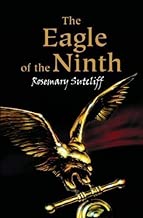
The Eagle of the 9th
The Eagle of the Ninth is a fantastic story of Roman-occupied Britain and one of Sutcliff’s most beloved books. A young Roman centurion embarks on a quest to clear his father’s legion from the dark rumors which surround it. There are great themes about friendship, loyalty, true freedom, and coping with disabilities. There’s also a subplot of a clean, sweet romance, though parents might want to know that the girl is quite young: earlier teens. This is true to the historical time period in which girls married quite young and therefore didn’t bother me. Appropriate for 10 year old advanced readers; I recommend age 12 or older for most readers.
The Silver Branch
Generations after the events of The Eagle of the 9th, a young Roman surgeon lands in Britain and finds himself thrust into a pivotal role as Emperors rise and fall in the disintegrating Roman empire. The Silver Branchis a completely clean and enjoyable book with a shy, brave protagonist. Great for 10 and older.
The Lantern Bearers
Another volume which follows the descendants of The Eagle of the 9th hero, The Lantern Bearers is a more serious look at the repercussions of Rome withdrawing from Britain. A major theme is trying to save bits of civilization from the darkness of barbarian invasion. Other themes include the horror of slavery and family loyalty. There is a forced marriage which turns out all right in the end; clean and appropriate for young readers.
Sword at Sunset
Sword at Sunset, a retelling of the Arthurian legends, is one of my least favorite Sutcliff books. This sequel to The Lantern Bearers unexpectedly jumps into all sorts of more adult content, such as a steamy incestuous seduction scene. A theme throughout the book is homosexuality among the “knights.” Artos, the Arthur character, says he wishes his whole army was homosexuals since it saves trouble with girls. The homosexual couple is highly romanticized, actually having the most stable and loving relationship in the book. This stable homosexual couple is a foil to Artos and his queen’s troubled marriage. There is also an adultery scene with some explicit details. Definitely avoid this one for younger readers.
Mark of the Horse Lord
The Mark of the Horse Lord is a darker, more violent Sutcliff book. In several ways reminiscent of The Prisoner of Zenda, The Mark of the Horse Lord is the story of an ex-slave who is asked to impersonate a British king. Parents will want to be aware that the ending involves the protagonist committing suicide in an attempt to protect his tribe from annihilation. Suicide is portrayed as the noble course of action and admirable. Better for older teen readers.
Outcast
In Outcast, Sutcliff is at her best with a clean, intriguing story about a Roman boy, raised by a British tribe, then outcast due to superstition. The story of this boy’s sufferings is sad, but there are great themes about the horror of slavery and the light of friendship. Younger sensitive readers may be upset by the cruelty of the slave treatment described. Readers who enjoyed The Eagle of the Ninth will also enjoy Outcast.
Song for a Dark Queen
Song for a Dark Queen is another darker Sutcliff story. This book tells the tragic story of Boadicea, the British queen who was treated unjustly and cruelly by the Romans. In addition to being a very tragic, dark story, this book is relatively high on sexual references, including jokes, tribal customs of fornication during the Harvest Festival, and an erotic naked dancing scene.
Black Ships Before Troy
In this retelling of the Iliad, Sutcliff succeeds in capturing some of the splendor of this epic while simplifying the language to make it accessible for younger readers. Black Ships Before Troy follows the original plot closely, so plot elements include Paris abandoning his wife to pursue Helen, and Helen in turn abandoning her husband to run away with Paris. There are no explicit scenes. However, the terrible repercussions of their sins are very clear; the message is that Paris and Helen acted dishonorably and caused incredible suffering to many in a ripple effect. Appropriate for 14 and older.
Flame-Colored Taffeta
Flame-Colored Taffeta is an unusual Sutcliff story insofar as the protagonist is a young girl and the setting nearly a millennia later than most of her works. This is a clean, interesting book about two children who act mercifully towards a Jacobite spy. The caveat with this book is a plot element involving Damaris, the protagonist, using a witch charm to blackmail someone into helping her. Damaris knows she’s doing something wrong; it is a classic scenario of the ends justifying the means in the author’s eyes.
Blood-Feud
Blood Feud is a fascinating book which delves into the movements of the Saxon races south to Constantinople. It also explores the dark custom of blood feuds among the Saxon people where sons fight to the death to right family wrongs. This is not portrayed as particularly right or wrong but rather the way the custom went. Another interesting theme in this book is Sutcliff’s “tolerant” approach to religion. She portrays religion as being more rooted in an individual’s ethnicity and family history than in a conviction of absolute truth. Better for older teen readers.
The Sword and the Circle
The Sword and the Circle is Sutcliff’s second take on the Arthurian legends. In a more typical courtly style than Swords at Sunset, Sutcliff recounts the tales of Arthur’s knights of the round table. Sutcliff uses the unsavory version of Arthur’s origins: his father lusted after a married duchess and started a war to have his way with her. Arthur himself ends up committing incest with his sister which leads to Mordant. Various knights fall into sexual sins, such as Lancelot being seduced and committing fornication with Elaine, and Tristan and Iseult committing adultery. Overall these scenarios are recounted factually rather than with graphic details.
A Mixed Bag
As you can see, Sutcliff’s books are a bit like Russian roulette if your children pick them up at random. A few of her books contain a fair amount of sexual references, though they are generally not graphic. However, many of her other books are completely clean and excellent historical fiction. The best part of her books is an ongoing theme about saving “keeping the light burning,” by which she means saving culture, art, civilization itself from being smothered.
Guides to more books will be added here as I read them.
As Catholic parents, we make sure our children are well-prepared for their First Holy Communion, Penance, and Confirmation. We discuss vocations and catechize about Holy Orders and Matrimony. But since Baptism is usually received at such a young age, it can be easy to overlook explaining the its importance to young children. If you’re looking for a beautiful, informative picture book to help your young children understand more about the symbolism, character, and rite of Baptism, check out When You Were Baptized, a new book from Liturgy Training Publications.
Affailate Links Included. See Footer for Full Disclosure.
Written directly to Catholic Children
My little children were immediately captivated by this beautifully illustrated picture book which speaks directly to the child. Written in the second person, When You Were Baptized methodically moves through the rite of Baptism, highlighting each symbol and action. Children learn what each oil symbolizes, why the priest blesses the holy water, what the white garment signifies, and more.
Simple Explanations for the Littlest Listeners
Note that this picture book does not event attempt to touch on the depths of symbolism behind each part of a Baptism. In a message for parents at the conclusion of the book, the author explains that very young children (under age 6) are not yet old enough for moral considerations. Therefore, this book is focused on the more natural symbolism involved in Baptism versus the moral and Biblical implications.
It’s apparent that the author’s Catechesis of the Good Shepherd background influenced the scope of this book. In the Catechesis, the first years are focused on cultivating wonder and love for God. This book with its simple explanations and overarching tone of welcoming the child into God’s family is true to the Catechesis vision.
A Great Baptismal Gift
This lovely picture book would be a wonderful gift for a godparent to give at a Baptism, or even to commemorate the Baptismal day of an older child. It also makes a wonderful addition to any Catholic family’s picture book library. See further information here on the Publisher’s website.
For more great books about Catholicism, the saints, sacraments, and more, check out this book list!
I received a copy of When You Were Baptized from Liturgy Training Publications in exchange for my honest and unbiased review.
Affiliate Links Included. See footer for full disclosure.
Are you a Catholic parent looking for ways to help develop a virtue-focused mindset in your 8-14 year old child? If so, you will want to check out Made for Greatness: A Growth Mindset Journal for Courageous Catholic Youth. Recently released by well-known Catholic blogger Ginny Kochis of Not So Formulaic, this book is a valuable self-teaching tool which helps children own their decisions, goals, and choice of focus.
Virtues, Stories, Prompts, Prayers
In Made for Greatness, Ginny introduces your children to each of the four Cardinal and three Theologial virtues in a way they have never before encountered them. After a brief accessible definition of what the virtue means, Ginny plunges straight into concrete examples of Saints, and contemporary people, whose lives demonstrated the virtue. I appreciated the diversity of saints from around the world and everyday people ranging from a young American with cerebral palsy to an architect from Oman.
Ginny also includes journaling prompts for brainstorming, reflection, goal-formation, and prayer. There are also scriptural passages which relate to each virtue. By the end of each chapter, your child will have come up with a concrete plan to begin implementing the virtue in his or her life.
Neuroplasticity and Empowerment
One part of Made for Greatness I really love is how Ginny brings in science to back up her claims. If you’re a bit of a science geek like me, you may have read up on the emerging field of neuroplasticity: the amazing, God-given ability our brain muscles have to create new neural pathways throughout our lives. Ginny takes the concept of neuroplasticity and simplifies it so even 9 and 10 year olds can grasp that they can free their brain from bad habits and create new ones. Children (and adults!) can feel stuck in their usual way of life and doubt their ability to truly improve. Ginny uses science to empower children to believe in their brain’s ability to build better habits.
Great for Gifted and Special Needs Children
Given her years of wisdom from both parenting twice-exceptional children and writing for Not So Formulaic, it comes as no surprise that Ginny is meticulous in making this journal accessible for exceptional children. This book is written to work equally well as a solo study for an independent reader and writer, or as a joint project the parent reads to the child and discusses. The spacing is helpful for dyslexics, and color pictures and icons scattered throughout help visual learners. Gifted children will appreciate the science and broad scope of journaling prompts offered.
Made for Christ
The overarching message throughout Made for Greatness is both inspiring and empowering for children. This journal challenges children to develop a growth mindest: “a constant decision to see challenge as an opportunity for growth.” At the same time, it enables children to work past negative self-talk, bad habits, and lack of confidence. One of my favorite sections is the conclusion, where Ginny reminds kids they are made for greatness and gives new verbalizations to substitute for common negative thoughts.
In The Lunar Chronicles by Marissa Meyer, fairy tales meet science fiction. In this exciting series, a deadly disease is ravaging earth, a totalitarian moon queen is threatening war, and true love wins as some creatively portrayed princesses find their princes. These popular books are clearly aimed at teenagers, and the question is: are they indecent, innocent, or somewhere in between?
The Biggest Positive
The Lunar Chronicles had a surprising number of positive aspects. I’ll admit, I was skeptical about the covers! The best part about the series was its staunchly pro-life and anti-discrimination theme. In both earthen and lunar society, there is a lack of respect for the dignity of all human life.
On the earth, people who have received robotic parts, such as hands or feet, are considered as fair game to be used for medical research against their will. Labeled as “Cyborgs,” these people lack many of the rights and protections other earthen citizens have. Some, like the heroine of the series Cinder, are treated as property.
In lunar society, on the moon, some people are born with the “gift,” which is the ability to manipulate others by controlling their bio-electricity. Those unfortunate lunars who aren’t born with this “gift” are labeled as shells and torn from their parents at birth to be killed since they are “defective.” Some shells, like Cress, the heroine of the third book, do survive, but only as slaves.
Meyer does a fantastic job showing the appalling injustice of treating Cyborgs and shells as less than human. In our current society, this is truly a valuable theme. Any Catholic reader will immediately see parallels with abortion and euthanasia.
Other Positives
Other great themes in this book include an emphasis on showing the dangers and threat of totalitarianism and fascism. The lunar queen’s greed for power and adoration lead her to establish a dictatorship built on mind control and illusion. While her court lives in luxury, her people are impoverished and abused.
To give her full credit, Meyer does not fall into the trap of portraying the root of the queen’s evil to lie in the monarchy. Although the monarchy on the moon is portrayed as the example of fascism, Meyer fairly portrays several earthen countries as also having monarchies that are just. The problem is not the monarchy; it’s the coercion and injustice. However, in the end of the series, Cinder, crowned as moon queen, decides to dissolve the monarchy in favor of a republic.
Strong friendships have a prime place in the series. Without their mutual trust and respect, the four heroines could never have overthrown the moon queen’s evil regime. The girls’ friendships with their princes, and even android robots, become important in resolving the crisis. Loyalty, sacrifice, and love are the real tools that bring down the evil regime.
Redemption is another important motif in The Lunar Chronciles. Most of the “princes” are in need of redemption when they enter the story. Wolf is a volatile, genetically modified man with a dark past. Thorne is a cocky thief. Jacin is a palace guard with divided loyalties. The third heroine, Cress, also is plagued with guilt for working for the lunar tyrant for years as head programmer. Each of them finds redemption through sacrifice and reparation by the end of the series.
Unlike many teen novels, The Lunar Chronicles are relatively clean overall. Minimal crass language. Minimal mentions of alcohol or drugs. Almost no sexual content: there are several passionate kisses between main characters, but it doesn’t go farther than that. There are some passing mentions of “companionship” rooms and “escort” droids, which I deduced had to do with some kind of prostitute droids. But that’s it.
Sounding pretty great so far? Read on for the not so pretty.
One concern I had with the series was how Meyer handled the Red Riding Hood retelling in book two, Scarlet. Scarlet was great: fiery and tough. But Meyer chooses to twist the story so the Wolf becomes the “prince.” I have mixed feelings about this. On the one hand, there’s great redemption here: the Wolf repents when he falls for the girl and spends the rest of the books trying to help the good side. But on the other hand, I think Meyer twisted the spirit of the original fairy tale by changing the wolf into the good guy. I generally don’t like plots where a villain symbol is portrayed as a good guy. And in fairy tales, wolves are the bad guys. But then, in fairness, St. Francis did redeem the wolf of Gubbio, so there is a certain precedent to redeeming the wolf.
Also, Wolf’s genetic engineering and past training as a wolf-man brings some other challenges to the series. His wolf-like instincts make him very protective of his “mate” Scarlet, but also bring violence into their relationship. At one point, he almost rips her throat out while under the mind control of a lunar villain. The thing that bothered me here and in a few other Wolf-Scarlet scenes was there seemed to be a sensual-sexual aspect to the violence. Almost a BDSM vibe. Subtle, but there in my opinion.
The violence is minimal in the first book, but quickly ramps up in the rest of the series. There is an awful war, with some truly terrible genetically engineered creatures running amuck. There are descriptions of people cutting their throats and shooting themselves under lunar mind control. Wolf-men rip out people’s throats. Lots of bloody fights. Overall, I considered these books a little heavy on the graphic violence.
Another element in the plot that never seemed to be adequately addressed was the mind control question. Mind control is portrayed as an evil overall, yet Cinder, the heroine, frequently uses it to protect herself and others. She also uses it to fight, and sometimes, in anger, to humiliate. In contrast to Cinder, Princess Winter in the fourth book simply refuses to use mind control for any reason… until in the end she does once to save her love. The question is: if mind control is evil, is it licit for Cinder and Winter to use it to protect others? Morally speaking, if mind control is inherently an evil act, using it for a good end still makes the act evil. Food for thought.
One final negative with The Lunar Chronicles is that they’re simply not all that well-written. Yes, it’s a fast-paced, exciting plot with lots of action and dialogue. But there is little to no descriptive language to flesh out the story. These books read like what they are: typical 21st century YA fiction.
Conclusions
Overall, The Lunar Chronicles are a gripping, fairly clean series with lots of action, romantic tension, and a great pro-life theme. But on the other hand, they’re not particularly well written, not great literature, and have some concerning elements like the confusion about mind control, sensual violence at times, and overall graphic violence. Worth reading? Maybe if you have an older teen who really enjoys science fiction and wants to use them for a book report to delve into some of the controversial topics. Otherwise, I’d give them a pass.
(If you do happen to want to buy them, please use my affiliate link here for The Lunar Chronicles!)
Looking for great books for Catholic teens? Check out some of my book lists!
Ruby in the Water by Catholic Indie author J.P. Sterling was as unexpected as a rainstorm in the middle of a sunny afternoon. As a pluviophile, I love rain, so this is actually a compliment! This book explores so many great themes about disabilities, family, adoption, and coming of age. And equally importantly, Ruby in the Water tells a fascinating, relatable story about family secrets, forgiveness, and the power of love.
Coming of Age with Disabilities
Peter Arnold is without question a twice exceptional child. Because he was born prematurely, he has cerebral palsy, an undeveloped urinary tract, and a host of neurological issues. But he also has an incredible gift: a unique musical ability which brings him fame as a pianist from a young age. Navigating young adulthood isn’t going to be easily for medically complex, talented Peter.
A Special Family
Fortunately, Peter has the support of his devoted parents and five brothers and sisters to help him through the coming storm. The Arnold family is by no means portrayed as perfect, but parents Thomas and Anne’s dedication to and love for their children are truly inspiring. Ruby in the Water is peppered with flashbacks from both Peter and his parents’ perspectives, giving the reader a window into Peter’s challenging childhood and his parents’ graceful acceptance.
All is Grace
Without question, Ruby in the Water is a deeply Catholic book, but Sterling takes the higher road and lets her story speak for itself as regards its message. There is no pontificating or preaching here; just a gripping story that happened to happen to Catholics. The reader is left to decide on his own whether Anne and Thomas handle their challenges with greater grace because of their faith.
An Unabashedly Pro-life Story
Ruby in the Water does have an amazingly strong pro-life message since Peter is a late-term abortion survivor. This is only revealed at the end of the book, but clearly had huge impacts on the lives of Peter, his adopted family, and his birth mother. The brave souls who chose to save Peter’s life after a botched abortion are an inspiring example of truly embracing the pro-life view that every human life is precious.
A Short, Inspiring Book Mothers Will Enjoy
The magic of this book is the bond between Peter and his adopted mother Anne, whose love and patience shines through the tragedies. I think most moms will find themselves smiling and commiserating with Anne’s struggles to raise her brood of young children, especially with Peter’s special needs. Her graceful yes to God’s plan is an inspiration.
The only negative things I found to criticize in this book are a few editing errors that do give it a slightly self-published feel. Otherwise I am happy to recommend it for adults, young adults, and older teenagers. There is no objectionable content that would preclude younger teens from reading it, but this book will resonate more with parents and older teens.
I received a copy of Ruby in the Water in exchange for my honest and unbiased review.
Dear Mr. Knightley is certainly not a classic, but at the same time it isn’t simply fluff literature. The majority of the book is a series of letters written by Samantha Moore, journalism grad student, to the mysterious benefactor who is paying for her education. The multitude of references to Jane Austen books, the Bronte sisters, Dickens, Alexandre Dumas, Daddy Long Legs, and other classics are enjoyable for book lovers. But this is certainly not a period-era book; in fact, there is quite an intentional dichotomy between the civilized classical world Samantha, commonly known as Sam, wishes she belonged to and the raw, rough life she has actually lived.
Sam has unquestionably had a tough life.
Her earliest memories are of abuse from her parents. In and out of the foster-care system for years, never connecting with a foster family, she ends up on the streets at the age of 15. After months on the street, she ends up in a Christian group home, where she finds a precarious sense of safety. Yet after years of danger and tumult, she finds herself unable to connect with those around her, instead
The question becomes, how can Sam heal from her traumatic life?
There are two answers offered in the novel: first, that Sam needs to “find herself,” and second, that she needs to learn to trust God. I was pleasantly surprised by the second theme, which is subtle and not fully developed, but undeniably present.
With the first theme about healing by “finding yourself,” I was concerned initially about Gnostic influences, but ended up deciding that the author’s intent was simply to show that Samantha needed to stop hiding behind her impersonations of literary characters. Samantha had perfected the art of copying the speech and mannerisms of whichever character she thinks appropriate for the situation: an amicable Jane Bennet, a ruthless Edmond Dante, a spirited Lizzie Bennet. Of course, this is a dangerous habit since it distances others and keeps them from meeting Sam herself. Sam learns that in order to make real friends, she has to let go of pretending to be her literary companions. The theme here is about stopping hiding your past, personality, or vulnerability, but rather embracing the unique experiences that molded you.
The second theme about healing as learning to trust in God is not as fully drawn out, but the Christian influences in Sam’s life are undeniable. Most of the people who help her are Christians: the priest at the group home, the professor and his wife who “adopt” her, the mysterious benefactor. Sam notices these people have a peace and certainty that she admits to wanting for herself. She finds when she chooses forgiveness, she finds peace and joy. There is no radical conversion in Dear Mr. Knightley, but the reader can certainly assume that with the continued influence of her good friends, Sam eventually will find her way home to Christ.
Who would enjoy Dear Mr. Knightley?
Refreshingly clean, this book is perfect for older teens and adults. I would not recommend it for younger teens due to some descriptions of domestic abuse and a plot line about Sam’s first boyfriend, Josh, pressuring her to “sleep over” with him. Although Sam refuses and eventually breaks up with him over his unfaithfulness, her reasons for refusing are rather nebulous. The teenage reader would already need to be able to make the correct moral judgments about the situation since Sam does not have the benefit of a strong moral compass.
This book is perfect for a light, quick read on vacation, when the kids are falling asleep, or at the end of a long day. The literary allusions are delightful, the romance between Sam and Alex is sweet, and there are some worthwhile themes about friendship, trust, and healing.
The Diary of a Wimpy Kid by Jeff Kinney is extremely popular with the 8-12 year old crowd. I see librarians and book clubs frequently recommending it as the perfect book to interest reluctant readers. I read it for the first time the other day in a little over an hour; it is more comic book than novel so it’s a very quick read. And, I hated it.
The basic problem is that the protagonist, Greg Heffley, is a lying video game addict who manipulates his friends, disrespects his parents, and doesn’t show personal growth to speak of in the story. I’ll break that down with details for you.
Greg is a liar. He lies to his parents, his teachers, his friends, and his peers. He’s not just any liar: he’s a skilled, sneaky one. For example, when his dad tells him to go play outside, Greg goes to a friend’s house and plays video games. Then he soaks himself in a sprinkler so it looks like he’s been running around working up a sweat, thereby deceiving his dad. On another occasion, Greg deceives his friend’s parents by sneaking in a forbidden violent video game in the case of an educational one.
Let’s talk about the video games. Greg lives for his video games, and he prefers violent ones. He describes car-racing as too babyish, and resents his friend’s contentment with such boring games. The more violent the game, the cooler for Greg. When Christmas comes, he sulks about not getting the particularly violent video game he wants and is ungrateful for all his other presents.
Greg has a rather sweet, slightly immature best friend, Rowley, whom he manipulates and bullies. He beats up Rowley using all the same moves his own brother used to beat him up. He makes fun of Rowley’s simpler tastes in video games and humor. On one occasion, he convinces Rowley to ride a big wheel down a hill repeatedly while Greg throws a football at his head to try to knock him off. This is the great friendship in the book, and I actually found it truly sad to read.
Greg has a abysmal view of adults in general. He considers them dumb and easily tricked. Unfortunately, in this story the adults are rather dumb and easily tricked. He repeatedly gets around video game grounding by sneaking off to game at his friend Rowley’s house. He tricks Rowley’s parents by sneaking in video games they have expressly forbidden in their home. Greg’s teachers are also sometimes taken in by his lies.
The ending of the book is supposed to provide a shade of redemption in one area of Greg’s life at least: he finally does something kind for Rowley. But here’s the problem: the kind act is telling a lie to get Rowley out of an embarrassing predicament. At this point, I was asking, really, Jeff Kinney? That’s the best redemptive moment you can come up with?
There are miscellaneous other problematic areas of the book. One that really bothered me was a scenario where Greg’s older brother left a bikini pictures magazine laying out and Greg’s littler brother took it to show and tell. This is supposed to be hilarious; it’s most certainly not what I want my 8-12 year old laughing about.
There is also extensive potty humor, lots of bullying at the school, a scene where the angry dad throws objects at Greg, and really resentful sibling relationships. All things considered, Diary of a Wimpy Kid is one of the last books I’d ever give my child to read. Don’t fall into the trap of believing junk food books like this are all is out there for your reluctant reader! There are so, so many better books out there! Check out my lists for 8 to 9 year olds , 10 to 11 year olds, and Graphic Novels and Comic Books for some awesome alternative options!